
Checking Criminal History in Clinton County
No single public database contains every Clinton County criminal record. Begin by deciding whether the need concerns an arrest report, current custody, a filed court case, a certified result, or your own fingerprint-linked state history. Names alone can produce false matches. Gather a full name, date of birth when lawfully available, spelling variants, the likely event date, the arresting agency, the court, and any docket or booking number. Each fact helps the proper custodian narrow an official search.
The county government gateway shows how offices are divided. The official Clinton County departments page is the source for the image below.
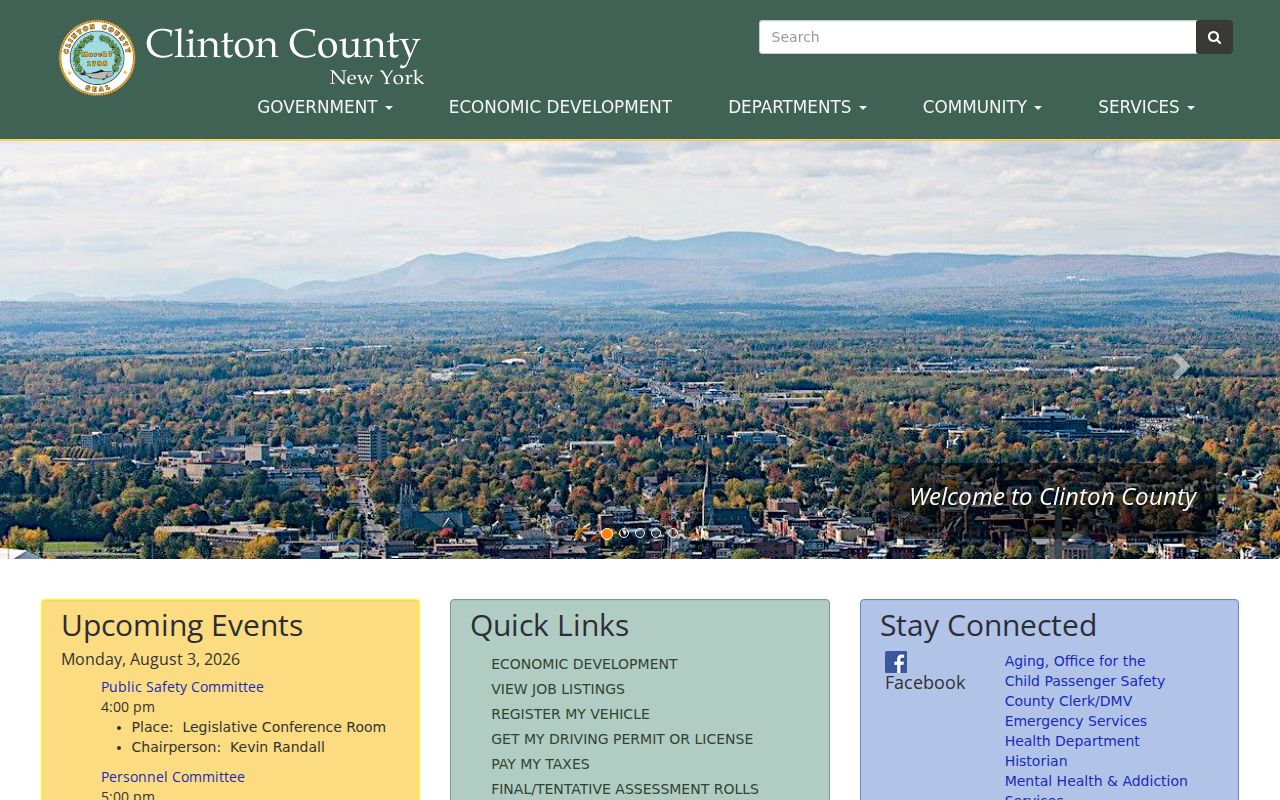
That division matters because a jail intake entry, a police narrative, and a court disposition are different records even when they arise from the same event.
- Search WebCriminal for a public pending case or future appearance, then note the court and docket number.
- Ask that court or its clerk for the case file or a certified disposition when proof of the result is needed.
- Use the Clinton County inmate link or booking line for current local custody.
- Send a focused FOIL request to the agency that created an incident, arrest, or older booking record.
- Use DCJS Personal Record Review for your own official statewide record, or the correct DOCCS or federal system for prison custody.
WebCriminal offers both defendant-name and case-number routes. Its fields help narrow a Clinton County result, but the named court remains the source for confirmation.
| WebCriminal field | Required or use | Format or caution |
|---|---|---|
| Search by defendant or case number | Choose one mode | The case-number route needs the docket as supplied by the court |
| Last name | Required in name mode | Common names can return the wrong person |
| First name | Optional or portal dependent | Narrows the result list |
| Middle initial | Optional | One-character narrowing |
| County | Optional | Select Clinton to focus the search |
| Court | Optional | Choices depend on county and court level |
| CAPTCHA | Required when displayed | Anti-automation check before submission |
Four Clinton County Record Paths
A single encounter can produce four separate products. The arresting agency writes the incident or arrest report. Clinton County Jail creates booking and custody data after intake. A court clerk opens the docket that tracks filed charges, appearances, motions, outcome, and sentence. DCJS later joins fingerprint-supported arrest, prosecution, disposition, and sentence events into a statewide record. Reporting delays, changed charges, sealing, and unmatched identifiers can cause those products to disagree.
| Record | Best access channel | Main limit |
|---|---|---|
| Incident or arrest report | Creating police agency or sheriff FOIL | Protected or active-investigation details may be withheld |
| Booking or custody entry | County inmate lookup and booking line | Initial charges are allegations |
| Court case file | WebCriminal, then the named clerk | Online results may not include documents |
| DCJS criminal-history record | Subject-only fingerprint Record Review | Not a public search for another person |
For local court access, County Court handles felony trials and dispositions, while Plattsburgh City Court and Town or Village Justice Courts retain their own lower-level records. The full case path is covered in the Clinton County criminal court case resource.
New York Official Background Checks
The New York State Division of Criminal Justice Services is the state repository, but it does not sell a public name search for another person. Its Personal Record Review lets an individual or that person’s lawyer request the individual’s own fingerprint-matched history. A suppressed response leaves out material hidden by sealing and youthful-offender rules. An unsuppressed response shows the subject the sealed or suppressed events that DCJS may legally disclose to that subject.
The official DCJS Personal Record Review instructions are shown below.
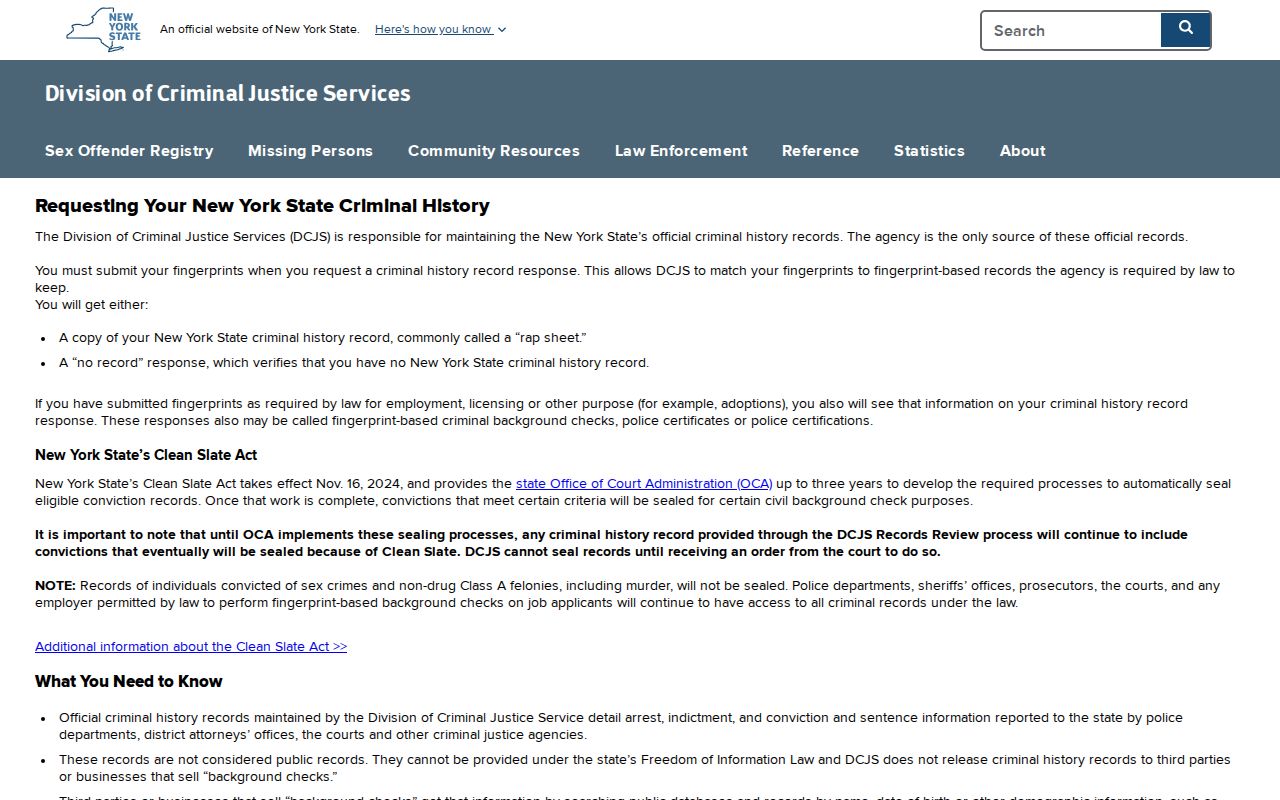
This channel costs $17.50 through IdentoGO as of February 2, 2026, returns by U.S. mail in about three to four weeks, and includes instructions for challenging errors. A fee-waiver packet is available from DCJS for a person who cannot pay.
OCA Criminal History Record Search is different. CHRS runs an exact full-name and date-of-birth search of public New York court data for $95 per combination. Each alias or different date of birth is another search. It is not fingerprint based, not nationwide, not a certified disposition, and has exclusions and older Town or Village Court gaps. A narrower local court search costs $5 per two-year period, and a certified disposition costs $5 from the court.
Clinton County Fingerprint Record Review
Choose the service code before booking. Code 15464Z requests a suppressed response. Code 15465F requests an unsuppressed response. The latter is useful when reviewing your own Clinton County record for a missing disposition or checking whether a seal reached DCJS. IdentoGO displays active locations, identification rules, and appointment times only after the code and location are entered. Use ZIP code 12901 and confirm the returned site at the time of booking rather than relying on an unofficial store listing.
The IdentoGO enrollment portal supplies the service-code entry screen pictured here.
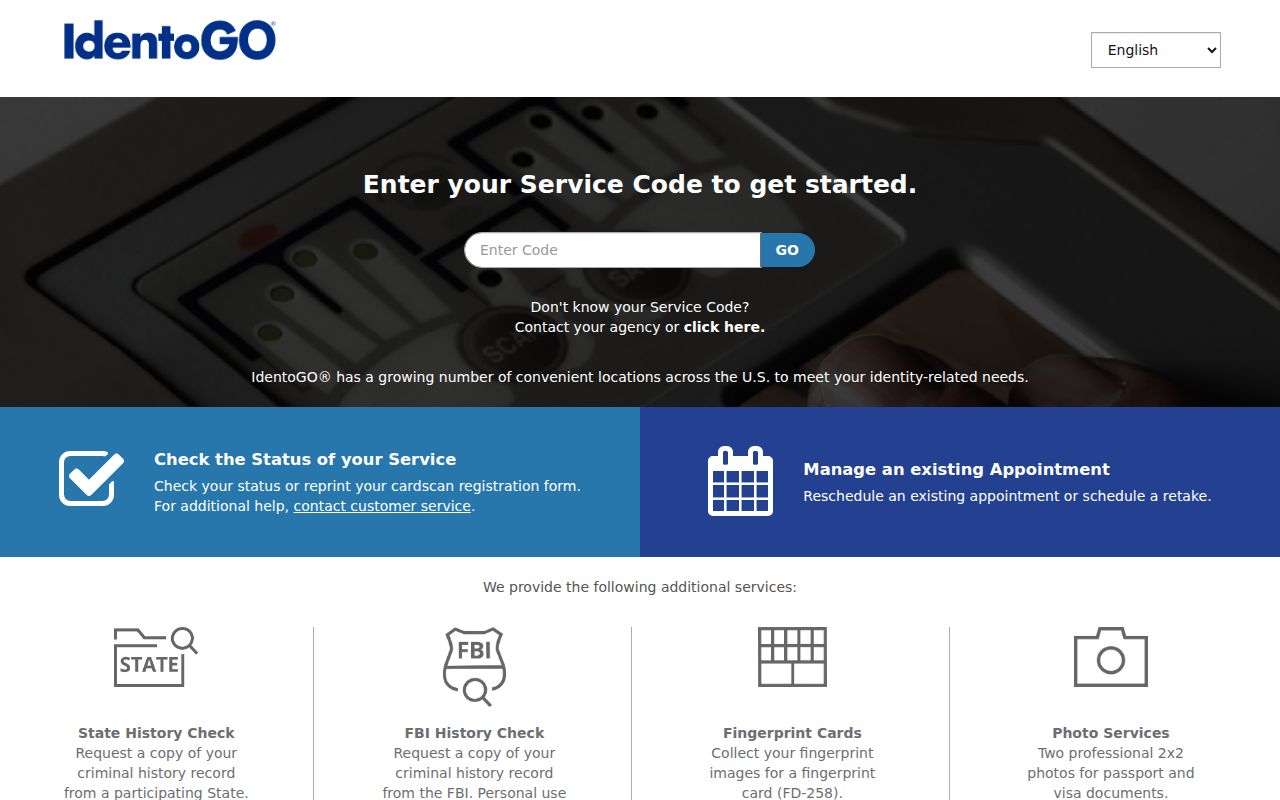
The appointment captures prints that tie the request to the subject, which is far more reliable than an exact-name result for a common name.
Criminal Record Types
Criminal records in Clinton County are grouped by who creates them and what stage they document. An arrest report records allegations and police action. A booking entry records intake, custody, bail, and the charges presented to the jail. An accusatory instrument states the charge filed in court. The docket then follows appearances, rulings, plea or trial, disposition, and sentence. None of those should be treated as a substitute for the others.
- Warrants: a judge issues them, police execute them, and the issuing court may show a public docket event.
- Police reports: the sheriff, City or Town of Plattsburgh Police, State Police, SUNY Police, or a federal agency keeps the report it created.
- Probation and parole: the sentence appears in court, county Probation holds its case files, and DOCCS administers parole.
- Registry records: DCJS maintains New York registrations, while the online Subdirectory publishes qualifying Level 2 and Level 3 profiles.
- Sealed and youth records: statutes restrict public visibility even though authorized justice agencies may retain access.
There is no comprehensive public Clinton County warrant-name database. Check the issuing court, review a public WebCriminal docket, call the sheriff, and use a focused FOIL request for any releasable existing record. An unexecuted or sealed warrant may remain unavailable.
Clinton County Custody Record Routes
Custody searches depend on where the person is held. The Clinton County Jail route is for current local custody and short local sentences. Its Corrections Division page links to VINELink rather than a county-built booking log. If the link fails to locate someone, call booking at 518-565-4351. A release, transfer, or booking under a different spelling can defeat a current-custody search. Historical jail material may require a sheriff FOIL request.
The DOCCS Incarcerated Lookup is the source of the state-prison search image below.
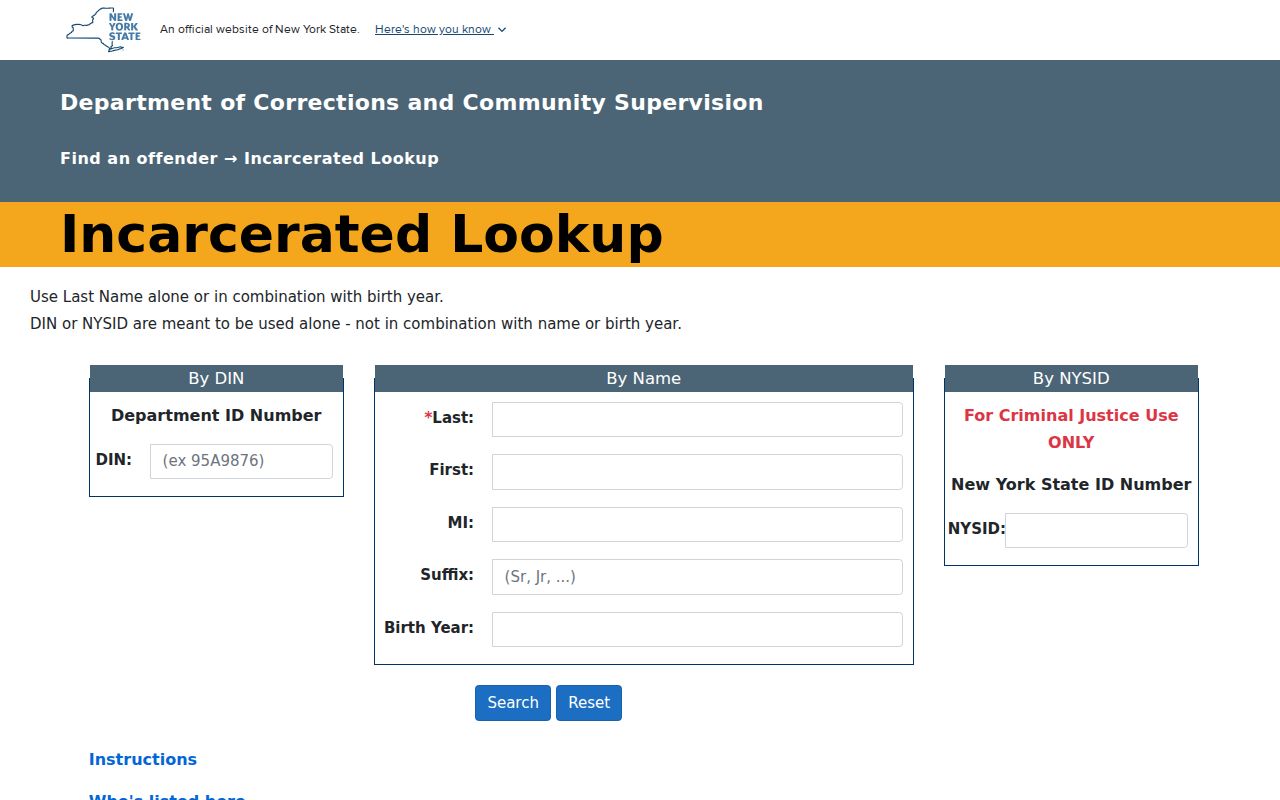
Use that database after a person enters New York state prison, not for someone held only at the Clinton County Jail.
Parole is state run, while federal custody requires the Bureau of Prisons locator. Neither route can replace the Clinton County Jail channel, and the federal locator cannot find someone held solely by Clinton County or DOCCS.
Inside a Clinton County Criminal Record
The content depends on the record. A DCJS response is arranged around identity data and fingerprint-linked event cycles. A court file is arranged by docket. A booking record is arranged by intake. Public versions omit or redact sensitive identifiers, sealed matters, protected victims, and other confidential data. When a final result is missing, obtain certified court proof and follow the DCJS challenge instructions for your own state record.
| Name and identifiers | Displayed name and aliases, birth information where lawful, and state or federal identification numbers on an official subject record. |
|---|---|
| Arrest and booking data | Agency, event date, booking number or time, initial charge, custody status, and bail when maintained and public. |
| Charges and statutes | Each alleged or filed offense, statute section, severity, count status, and later changes. |
| Disposition | Conviction, dismissal, acquittal, or another count-level outcome entered by the court. |
| Sentence | Custody, probation, fine, restitution, or other court-ordered terms that appear in the record. |
| Custody or supervision | County jail, DOCCS, federal custody, probation, or parole status in the system responsible for it. |
Read the final disposition for each count. The offense class shown at arrest or filing does not prove the charge survived to conviction.
Correcting Clinton County Record Errors
A wrong-person result calls for source checking, not assumptions. Compare the full name, date of birth where displayed lawfully, court, docket number, agency, and event date. Then confirm the result with the clerk that entered it. WebCriminal is an index, so eCourts staff cannot repair a source-court entry. For your own state history, fingerprints through DCJS reduce the risk that a similar name is attached to the review.
If a Clinton County disposition is missing from your DCJS record, get a certified disposition or sealing order from the court. Submit it through the challenge process included with Personal Record Review. DCJS also offers verification forms for several sealing provisions. A court seal may take time to reach the repository, especially while Clean Slate systems are being built, so compare the court order with a new suppressed response.
- Disposition
- The result entered for a charge or case.
- Dismissal
- The end of a charge without a conviction on that count.
- Part
- The courtroom or judicial assignment shown on a New York docket.
- Sealing
- A statutory limit on record visibility, not always physical destruction.
- Expungement
- Destruction or removal, used in New York mainly for specified cannabis records.
Public Access Laws in New York
Access turns on the custodian and the type of record. New York Freedom of Information Law applies to existing executive-agency records, including releasable sheriff and city police material. It does not make an agency answer questions or create a new report. Court clerks work under judiciary access rules and their duty to search and certify records. DCJS criminal-history files remain subject to a separate, fingerprint-based access framework.
Key Statutes:
Public Officers Law Article 6 gives the public access to existing agency records unless an exemption permits withholding or redaction.
Judiciary Law §255 directs court clerks to search and certify files in their custody, subject to lawful limits.
CPL 160.50 generally seals arrest and prosecution records after a favorable termination.
CPL 160.59 permits an application to seal up to two eligible convictions, with no more than one felony.
CPL 160.57 creates automatic Clean Slate sealing after its waiting periods and conditions are met.
FOIL generally requires an agency to make the record available, deny access in writing, or acknowledge the request within five business days. An acknowledgment is not a promise that production will occur within five days. It should give an approximate response date. A denial may be appealed within 30 days.
Clinton County FOIL Record Fallback
The Sheriff’s 2025 Application for Public Access to Records is the fallback for sheriff-created reports and older jail material that a current lookup does not show. Describe the event, approximate date, location, involved agency, and exact record type. Select inspection or copies, then provide contact details, signature, and date. Call the Sheriff’s Office before delivery to confirm the current email, mail, or in-person route. The form cannot obtain a DCJS rap sheet or a police report created by another agency.
Send Plattsburgh Police requests through the city’s records channel. Send Town of Plattsburgh Police requests to that department, State Police records through NYSP FOIL, and SUNY Plattsburgh incidents through the campus records channel. The City and Town of Plattsburgh are distinct custodians, even when the names look alike. The right agency is usually printed on the appearance ticket, report receipt, or other event paperwork.
Note: Copy fees depend on the response; the local sheriff source did not publish a fixed schedule beyond ordinary FOIL rules.
Sealed, Expunged, and Restricted Records
New York relies mainly on record sealing. Favorable dispositions generally seal under CPL 160.50, while some violation convictions use CPL 160.55. CPL 160.58 covers qualifying drug and related convictions linked to judicial diversion. CPL 160.59 allows an application to seal up to two eligible convictions, no more than one felony, after the law’s ten-year measure. Sex offenses, violent felonies, and Class A felonies are major exclusions. The sentencing court receives the application and the prosecutor gets notice.
Clean Slate took effect on November 16, 2024, and gives OCA three years to build automatic processes. Eligible misdemeanors generally seal three years after release from incarceration or sentence when there was no incarceration. Eligible felonies generally use eight years. Later incarceration can extend the period, and pending New York charges or incomplete supervision can prevent eligibility. Police, prosecutors, courts, and other authorized entities retain statutory access after sealing.
The change is not instant deletion. DCJS may still display an apparently eligible conviction until OCA completes the seal and transmits its order or data update. Verify relief with the sentencing court, then review your own suppressed DCJS response. Juvenile and youthful-offender records follow separate confidentiality rules.
Clinton County Supervision Records
Clinton County Probation/Alternatives to Incarceration operates at 34 Court Street in Plattsburgh. It prepares presentence reports, assesses risk and needs, supervises court-ordered probation, and may recommend early discharge, though the judge decides. Published local services include home visits, treatment and testing, electronic monitoring, restitution and fine tracking, DWI Victim Impact Panel work, and ignition interlock supervision. A court docket shows the sentence, but detailed officer notes and assessments are not public court records.
The county probation program page is the source for the local office image below.
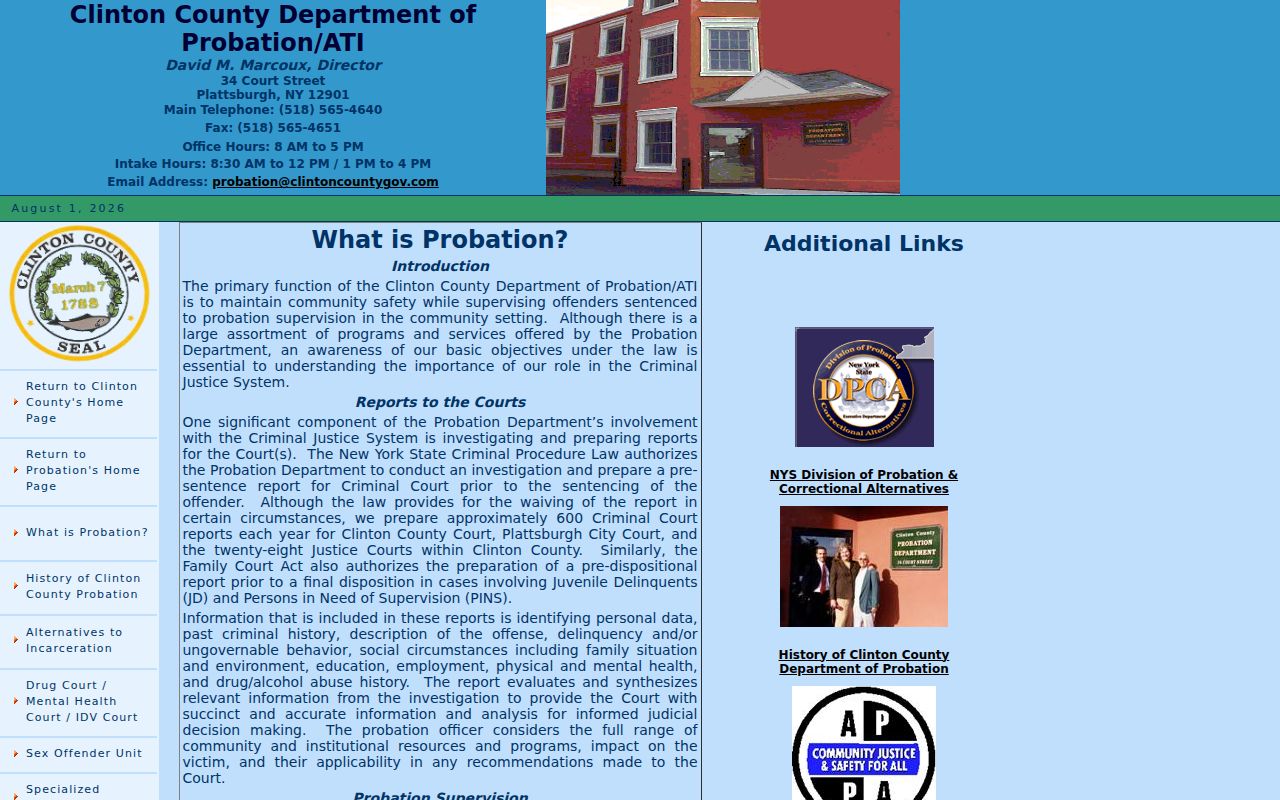
This local channel should not be confused with parole. DOCCS Community Supervision administers parole, and the New York State Board of Parole makes parole decisions. The DOCCS Parolee Lookup provides the state supervision search shown here.
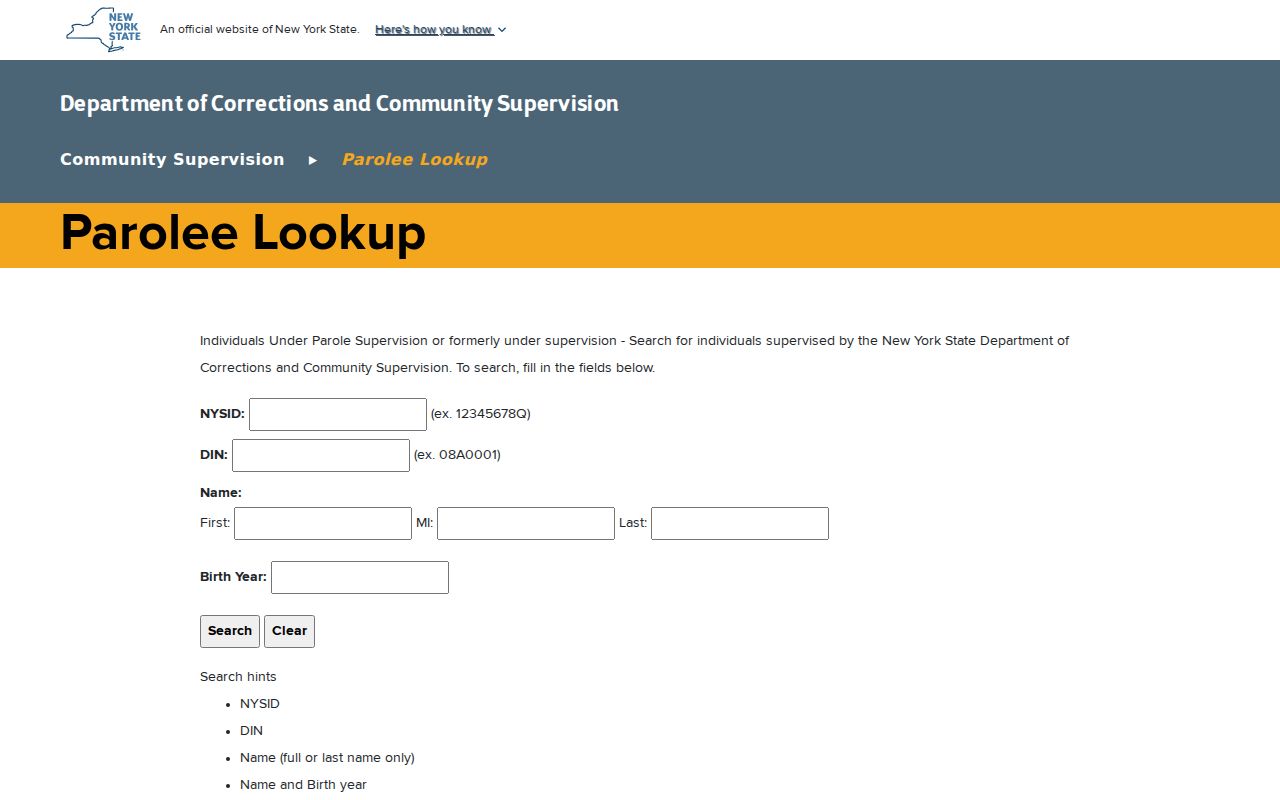
A parole result can show status or office information, but it is not the detailed supervision file. Probation commonly lasts one, three, or five years, with six- or ten-year terms noted for sex-offense supervision. A violation can lead to an administrative response or a formal petition. If a court revokes probation, the resulting order and any new sentence belong in the court case file.
Clinton County Charge Record Pipeline
An arrest charge can change before County Court. The police record shows what was alleged at the time of arrest. The jail records the charge presented at intake. The District Attorney decides what to pursue, and the accusatory instrument controls what is filed. A local criminal court handles arraignment and preliminary felony steps. An indicted felony then moves to Clinton County Court for trial jurisdiction and disposition. The Clinton County District Attorney page is the source for this office image.
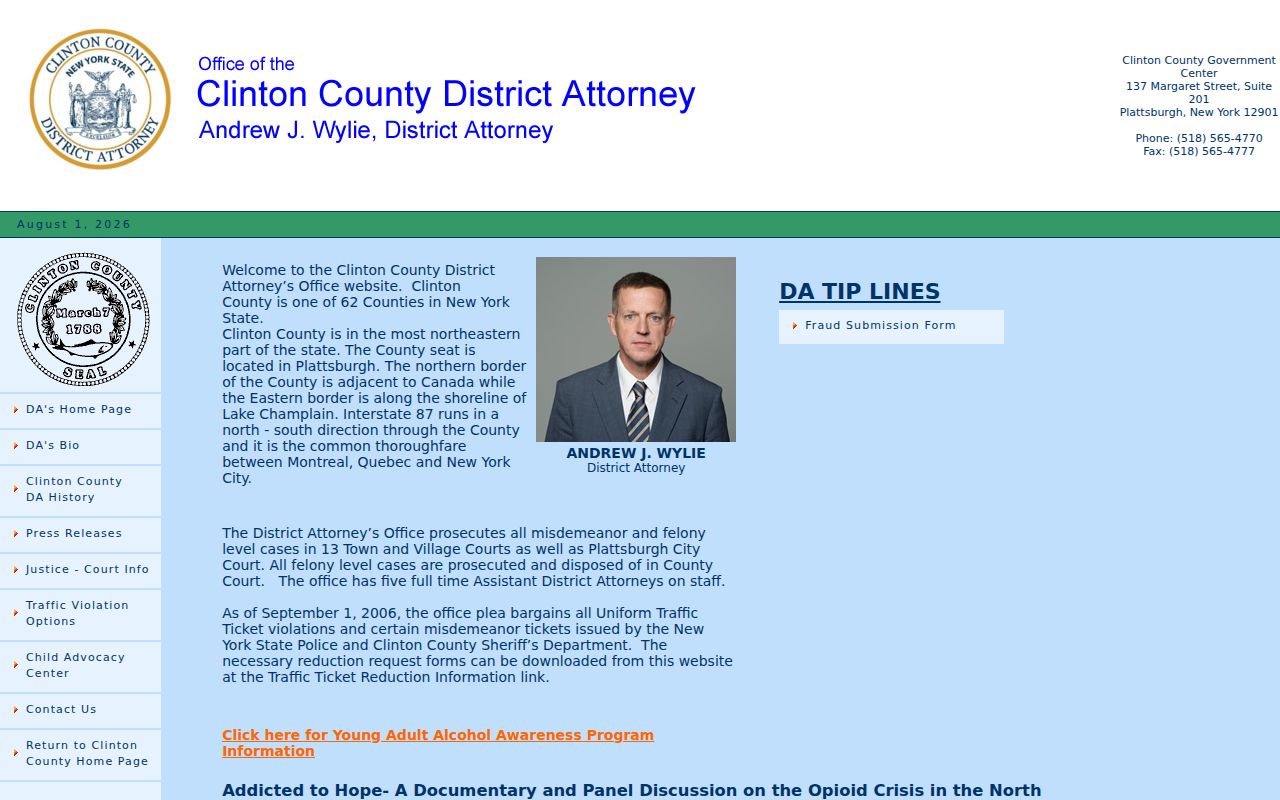
The office prosecutes matters across Plattsburgh City Court and 13 Town or Village Courts, with felony cases disposed in County Court. The Clinton County Public Defender page supplies the public defense access image below.
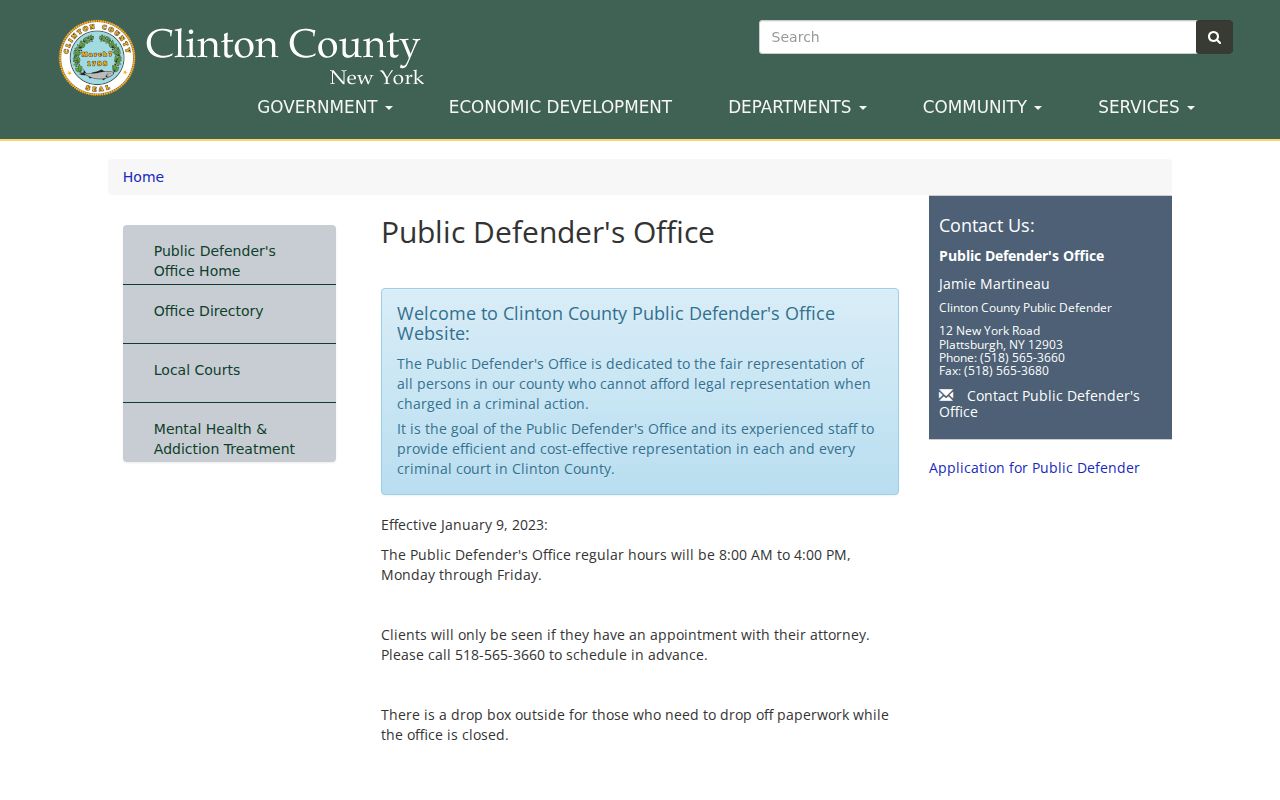
The current county directory places that office at 12 New York Road and requires appointments, an important correction to older general location references. New York labels felonies A-I, A-II, B, C, D, and E. A Class A misdemeanor can carry up to 364 days, while a Class B misdemeanor can carry up to three months. Those labels describe legal ranges, not the outcome of a Clinton County charge. The count-level disposition and sentence provide the result.
Clinton County Criminal Records by City
Plattsburgh is Clinton County’s only incorporated city. To provide three useful local profiles without mislabeling towns, the research set adds the next two largest incorporated places, Dannemora village and Rouses Point village. Local pages start at the proper police or responding agency, the local court, and the county jail when a person was booked there. Each route then follows a felony to County Court or a state record to DCJS.
Plattsburgh Criminal Records
Population 19,841 · City Police records, Plattsburgh City Court files, and county jail custody use distinct channels.
Dannemora Criminal Records
Population 3,287 · Village Court records are separate from village administration and the responding police agency.
Rouses Point Criminal Records
Population 2,195 · Confirm the current responding agency before requesting a village-area report.
These three incorporated places use different local custodians, but each can route a qualifying felony or jail booking into the broader Clinton County system.
Clinton County Federal Record Layer
Clinton County’s Canadian border, Lake Champlain shoreline, and Interstate 87 corridor create an unusual overlap of local, state, campus, and federal custodians. A federal agency report does not move into the sheriff’s files merely because the event happened within the county. Federal criminal cases from Clinton County lie in the Northern District of New York, and their dockets are searched through PACER rather than WebCriminal. The Northern District of New York court gateway is the source of the federal court image below.
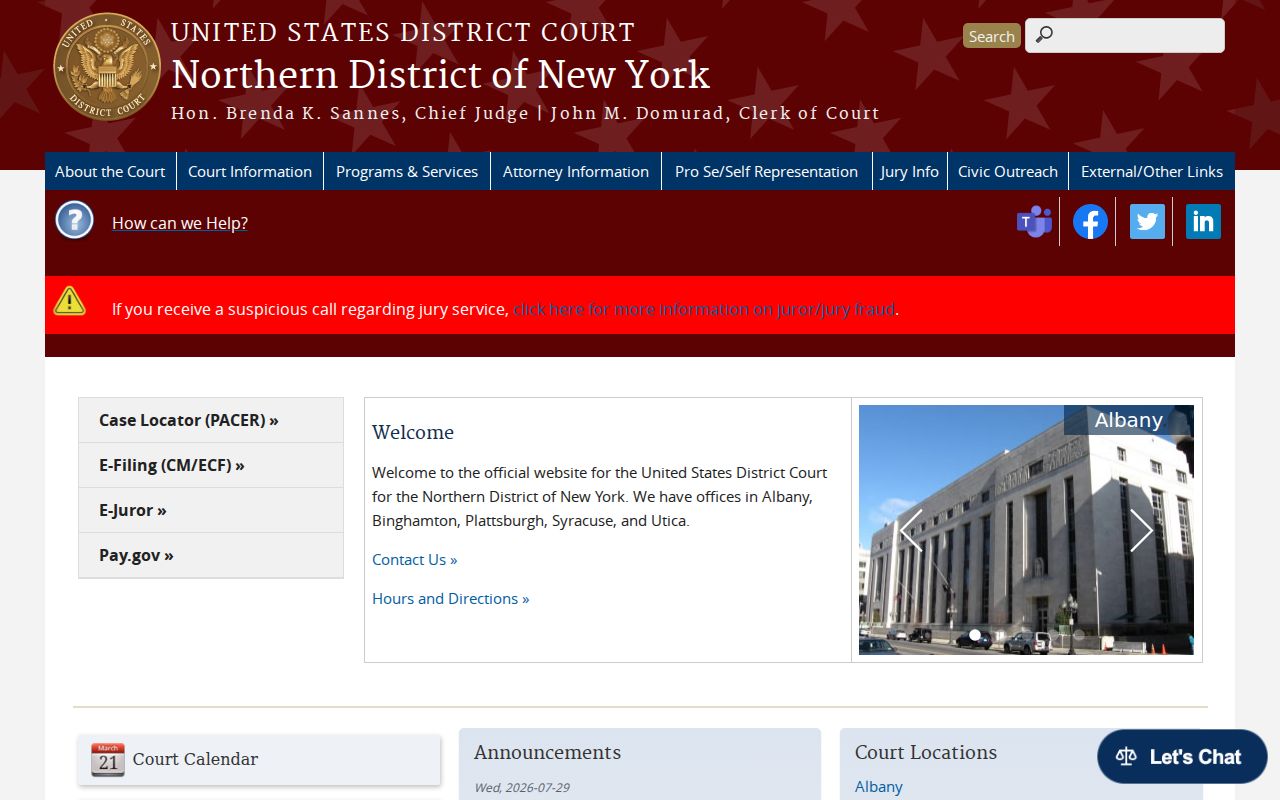
The district maintains a Plattsburgh federal venue, but the current court page should be checked for its location and contact details. The official PACER system supplies the docket-access image shown here.
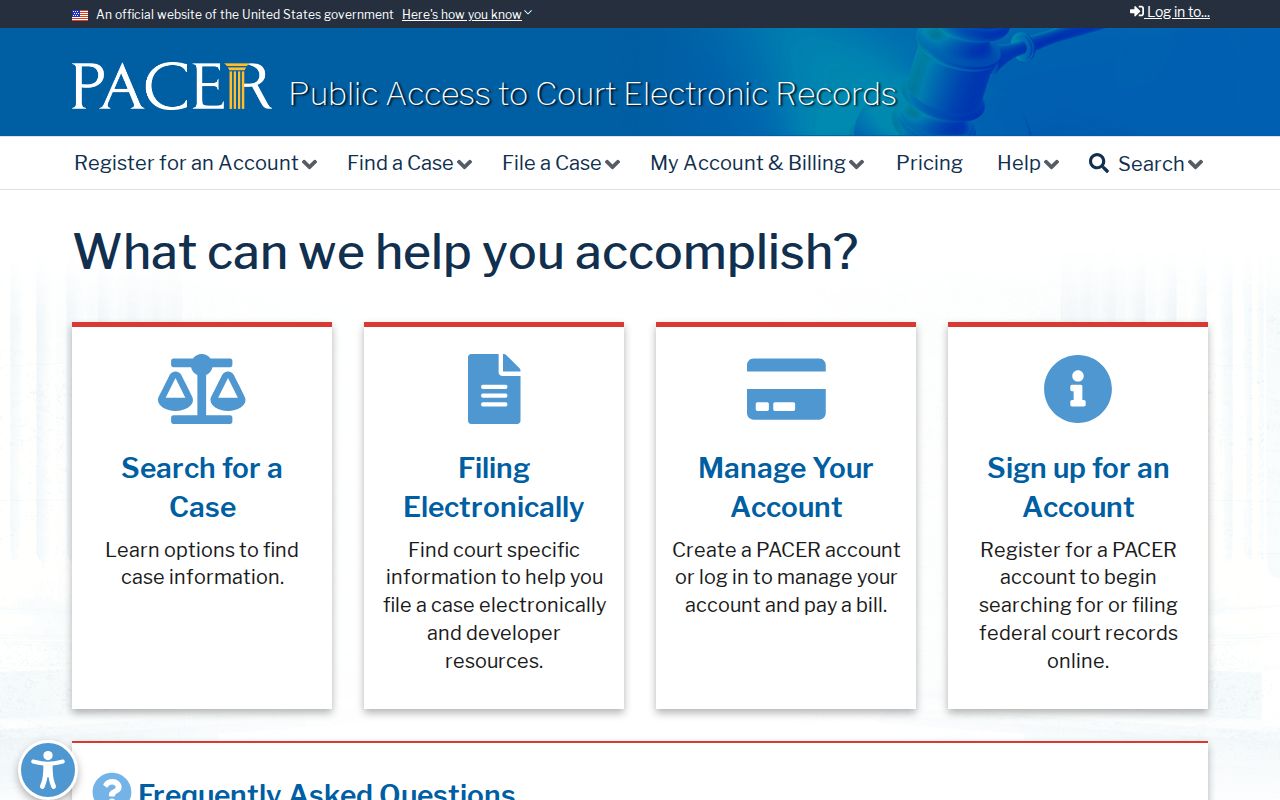
PACER accounts are free to open. Document access is generally ten cents per page, with common per-document caps and a quarterly waiver when usage is $30 or less. The FBI Identity History Summary is another subject-only route, costs $18 plus any print or channeler fee, and is not a substitute for a certified Clinton County disposition.
Clinton County Criminal Record Offices
In-person or phone access can solve gaps that online tools leave. County Court and the County Clerk share the Government Center complex, but their counter hours differ. The sheriff and jail are at McCarthy Drive. Probation, the District Attorney, and the Public Defender keep separate offices and different kinds of records. Call first when the exact counter, appointment rule, or file location is uncertain.
County Court and Court Clerk
137 Margaret Street
Plattsburgh, NY 12901
518-536-3840
Court hours: 9:00 a.m.–5:00 p.m.
County Clerk
137 Margaret Street
Plattsburgh, NY 12901
518-565-4700
8:00 a.m.–4:00 p.m.; last filing 3:45 p.m.
Sheriff and County Jail
25 McCarthy Drive
Plattsburgh, NY 12901
518-565-4300
Administration: weekdays, 8:00 a.m.–4:00 p.m.
Probation and ATI
34 Court Street
Plattsburgh, NY 12901
518-565-4640
Office hours: 8:00 a.m.–5:00 p.m.
Ask the clerk for certified court records, the sheriff for sheriff or jail records, and Probation only for information it may lawfully confirm. The office that holds the original record is the best source for a final check.